Energy rates have steadily increased over the last several decades in the United States, but the question we always hear is, “how much have energy rates and power prices gone up?” That right there folks, is the right question to be asking! Other important questions to ask are:
- How much should I expect my price of power to rise in the future?
- Why do utility companies raise energy prices every year?
- What can I do to prevent my energy rates from increasing every year?
In this short blog article, we will uncover the answers to many of these questions and provide solutions for how you can become a more financially stable consumer of power.
How Much Have Energy Rates Increased In The US Since 2000
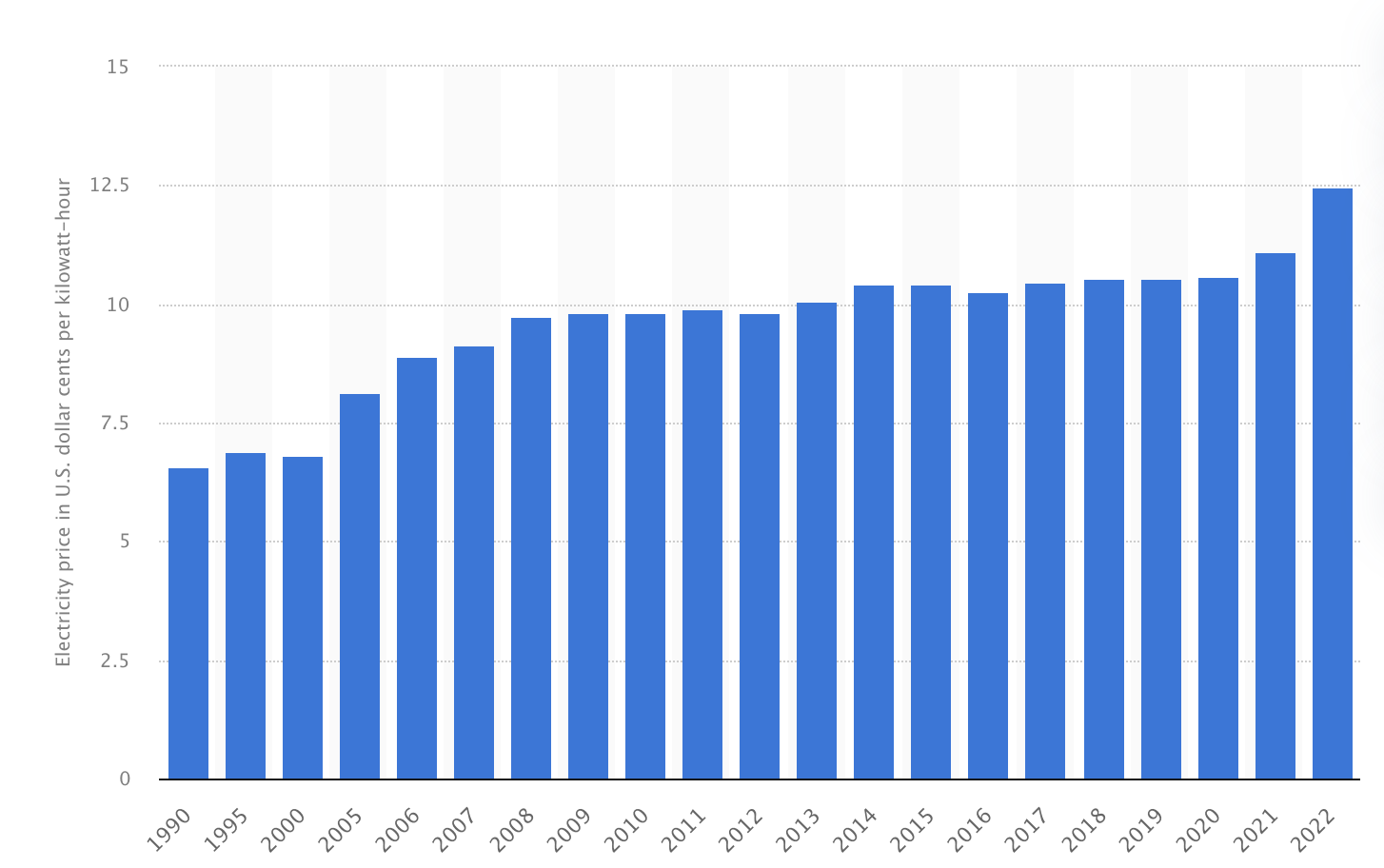
Energy Rates in the United States have steadily climbed higher and higher since the turn of the decade. According to Statista, the average cost per kilowatt hour in the year 2000 was 6.81¢. In 2022, the average cost per kilowatt hour was 12.49¢. This represents an 83% increase since 2000 with steeper rates increases occurring in 2021 and 2022.
How Much Have Energy Rates Increased In Texas In The Last Decade?
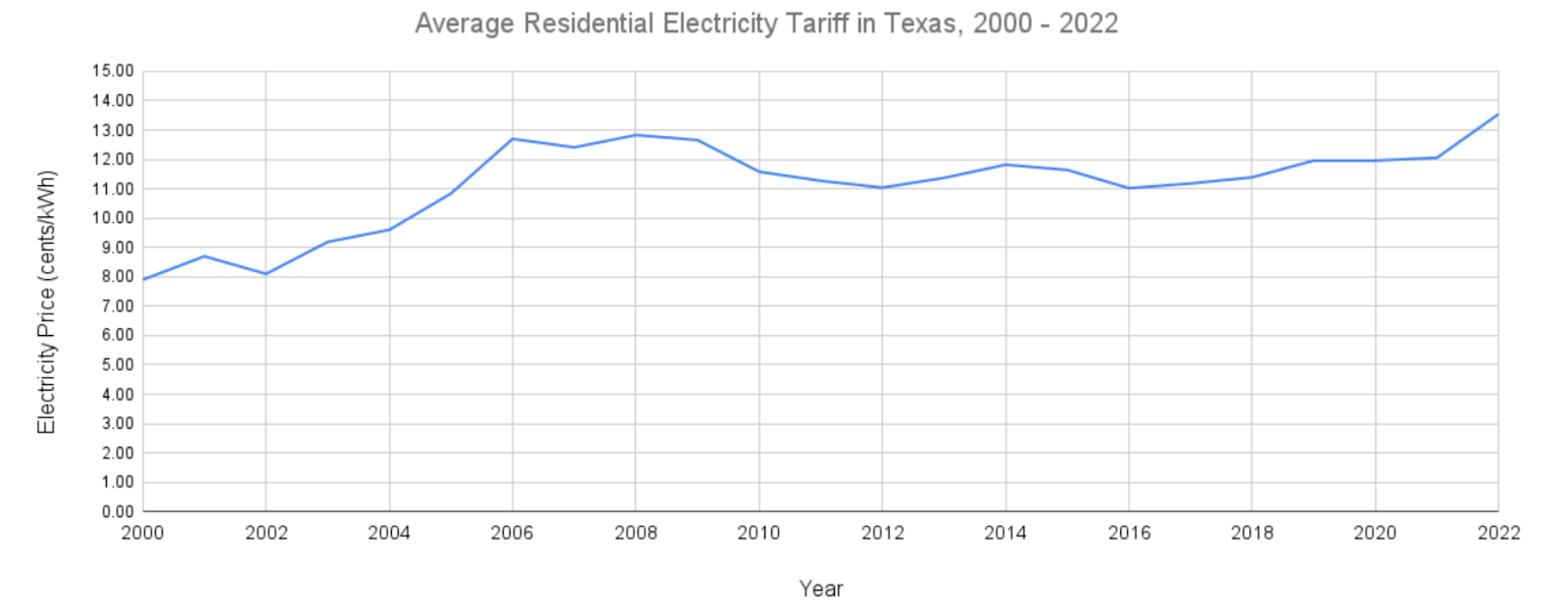
Texas’ power grid and energy industry is one of the few in the US that is deregulated. This means there are greater fluctuations from utility company to utility company when it comes to energy rates. On average, in 2013 the price per kilowatt hour was 11.35¢. Today, according to Quick Electricity, the average residential price per kilowatt hour is nearing 14.5¢. While this is a few cents below the national average, it represents a 27% increase over the last decade.
How Much Should I Expect My Energy Rates To Rise In The Next Several Years?
Many Texans remember the winter freeze of 2021 and they also remember the subsequent increases in power prices. In 2021, Texans saw an average price of power around 11.78¢ per kilowatt hour. In 2024, energy rate predictions are between 14-14.5¢. That means, over the last 3 years, Texans have paid an increase between 7-8% EACH year for their power bill. This doesn’t account for nationwide inflation which skyrocketed in 2022 and is still an issue for everyday consumers.
Over the last three decades, power rates normally increase between 4-5% each year. While there are many factors that go into energy prices increasing, homeowners are almost guaranteed that their cost of living with power is going to go up every year. At North Texas Solar, we are helping homeowners find other options than succumbing to this yearly increase in bills.
Why Do Utility Companies Raise Energy Prices Every Year?
There are many moving parts when it comes to energy prices, but there are two main reasons why utility companies raise energy prices every year:
Cost of inputs:
The production of electricity requires various inputs such as fuel, materials, labor, and capital. When the costs of these inputs rise, utility companies end up paying more to generate power. These higher production costs then lead to increases in retail electricity rates that get passed on to consumers. Some key examples of inputs that directly affect energy prices include:
- Fuel Costs: Electricity generated from natural gas, coal, and other fuels depends heavily on commodity market prices. As fuel input costs rise, energy gets more expensive to produce.
- Materials/Equipment: Solar panels, wind turbines, transmission wires, and other physical inputs have prices that fluctuate. Costlier materials make power generation pricier.
- Labor: Employee wages and benefits are a major input. Higher labor costs from factors like inflation or shortages raise production expenses.
- Capital Costs: Building and maintaining power plants requires major capital outlays. If interest rates go up, financing new projects and upgrades becomes more expensive.
- Regulatory Compliance: Regulations around emissions, efficiency, etc. can require added inputs and costs to implement. These get integrated into electricity rates.
In competitive power markets like Texas, increased costs directly impact the wholesale power prices, and in turn the retail electricity rates paid by customers. Rate hikes from pricier inputs sustain revenues and profitability for utilities. This pass-through of higher input costs is the fundamental driver behind rising energy prices.
Grid maintenance:
As more solar power comes online, maintaining stable grid integration requires infrastructure upgrades and added costs that may get passed onto consumers through higher electricity rates. Some key factors regarding increased energy prices include:
- Grid Upgrades: More solar interconnections and two-way power flows may require costly electric grid improvements, like new transmission lines, advanced inverters and upgraded substations. These upgrade costs would likely be integrated into retail electric rates.
- Ancillary Services: Solar variability requires more reserves and frequency regulation services to balance the grid. Procuring more fast-ramping ancillary services from fossil plants increases costs that ratepayers could absorb.
- Lost Revenues: Utilities earn less from traditional power sales as solar supplies more on-site generation. This creates a revenue gap that could prompt rate increases to sustain fiscal health.
However, solar also provides benefits like avoiding fuel costs, lower line losses, reduced congestion and emissions, and deferment of expensive conventional plant upgrades. Proper rate design and cost-benefit analyses are important to ensure solar integration does not disproportionately burden non-solar customers. Overall, grid maintenance is essential for broad decarbonization through solar power advancement.
How Can I Prevent My Power Rates From Increasing Each Year?
Realistically, going solar is your best bet to take control and lock in affordable power rates long-term.
With your own rooftop panels, you can either stay connected to the grid or go completely off-grid if you want full energy independence. For most homeowners though, we recommend staying grid-tied with solar as the main supply and batteries for backup during outages. This gives you the best of both worlds–solar savings paired with grid reliability when needed.
You see, instead of variable monthly power bills that keep rising, solar gives you a fixed, predictable monthly payment for a solar system that is financed. And once fully paid off or if you purchased your solar system outright, you own that power generating asset for free sunlight fuel forever! Plus, for some homeowners based on who their utility company is, any extra solar power you produce gets sold back to the grid for credit. It’s a win-win.
So if you’re fed up with ever-increasing utility rates but still want reliable electricity on demand, solar is your answer. Give our team here at North Texas Solar a holler to explore your options. We’ll map out a custom solar solution to take control of your energy costs once and for all. Let’s start reaping the benefits of your own personal power plant!